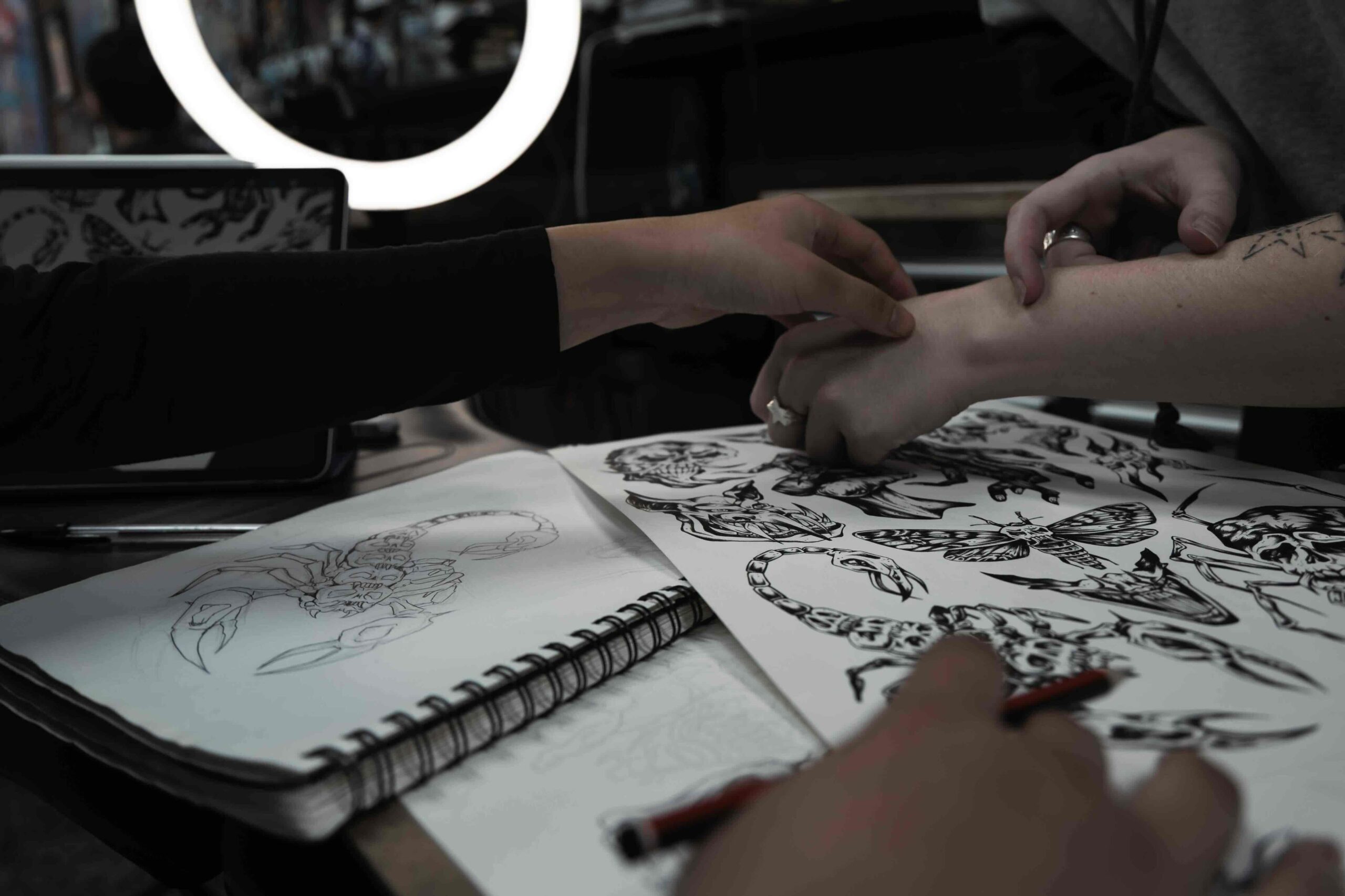
AI tattoo designs are everywhere now. Some are weirdly good. Some have twelve fingers, impossible shadows, and a wolf that looks like it has seen tax season.
So, can you bring an AI tattoo design to your artist?
Yes. But bring it as a reference, not as a final tattoo.
At Victims of Ink in South Yarra, that is the part we would love people to understand before they get emotionally attached to a machine-made masterpiece with zero respect for skin, healing, or the laws of physics.
Quick Answer
AI can be useful for showing mood, composition, subject matter, or the general direction you want. It can help you explain an idea faster, especially if you are still figuring out whether you want something gothic, ornamental, fine line, surreal, or bold and graphic.
What AI cannot do reliably is make the final tattoo-ready design. Tattoos need to work on a moving body, at a real size, with real line weight, real healing, and real long-term readability. That still takes a human artist.
If you bring an AI image to your consultation, the smart move is to explain what you like about it and let your artist redraw it into something that will actually work on skin.
Why AI Is Useful And Why It Still Lies A Bit
AI is decent at helping with:
- subject matter
- mood
- rough layout
- colour direction
- symbolism
- visual references when you do not know the right tattoo terms
It gets shakier when real tattoo constraints show up.
Common AI problems include:
- details that are too small to hold
- fake texture that cannot be tattooed cleanly
- strange anatomy, hands, faces, or proportions
- unreadable symbols and lettering
- too many ideas crammed into one piece
- shapes that ignore the body and placement
- designs that look crisp on a screen but muddy once healed
If an image only works because it is hyper-detailed at phone-screen size, it will probably need serious editing before it belongs anywhere near a stencil.

What To Tell Your Artist Instead Of Saying “Can You Do This?”
This is where people accidentally make life harder for themselves.
Do not just send the AI image and ask for an exact copy. Tell your artist what you actually like about it.
Useful notes sound like this:
- “I like the dark gothic mood.”
- “I like the circular composition.”
- “I want the snake wrapping shape, not the exact details.”
- “I like the floral softness, but I want it less busy.”
- “I like the eerie realism, but I want it readable from a distance.”
That gives your artist something useful to design from. Otherwise, they have to guess whether you love the whole image or just one tiny corner of it.
What Makes An AI Design Hard To Tattoo?
Most AI tattoo images are built for visual impact, not for tattoo longevity.
The usual trouble spots are:
- tiny stacked details on small placements
- low contrast designs that will blur together
- ornamental bits with no breathing room
- microrealism effects at a size too small to age well
- impossible wraps around arms, ribs, or hands
This is why placement and scale matter so much. If you are thinking wrist, fingers, ribs, or another smaller or higher-wear area, the design often needs to be simplified. The tattoo is not being downgraded. It is being saved from becoming decorative soup.
Let The Artist Redraw It
A good tattoo artist may change the layout, strengthen the lines, simplify the shading, resize the piece, or suggest a better placement. That is not them ignoring your reference. That is them doing their job.
At Victims of Ink, the goal is not to print a machine image onto skin. The goal is to turn the useful parts of your brief into a tattoo that fits your body and still makes sense after it heals.
If your AI reference leans toward fine line or illustrative work, start with the portfolios on our artists page and look for someone whose public work already sits close to that brief. If it leans darker, more surreal, or realism-heavy, do the same. The right artist depends on the final design, but the portfolio fit matters more than how pretty the AI mock-up looked at midnight.
Use AI Ethically, Not Lazily
AI can accidentally mimic existing artists, copyrighted characters, or other tattoo work a bit too closely. That gets messy fast.
The safer approach is:
- use AI for direction
- bring 2 to 4 extra references
- tell the artist what to keep
- tell them what to change
- let them build a custom version
One good AI image can help. A folder full of near-identical AI outputs usually does not. That is not research. That is visual spam with better lighting.
What To Bring To Your Consultation
The best reference pack includes:
- the AI image
- 2 to 4 non-AI references
- your placement idea
- rough size
- colour or black and grey preference
- notes on what you like in each image
- anything you definitely want removed
That makes the consultation faster and the quote more realistic. It also helps the artist tell you early if the concept needs more size, more contrast, or a different body area to work properly.
Final Thoughts
AI can start the conversation. It should not finish the tattoo.
If you have an AI-generated concept you are tempted to get tattooed exactly as-is, pause for a second. Then let a real artist turn the good parts into something that actually works on skin.
Ready To Book
Drop by our studio at 515 Chapel Street, South Yarra, or book a free consultation online. Send through your AI reference, your placement idea, and a few notes about what you actually want from it. We will help you work out what should stay, what should change, and what will still look good once the screen glow wears off.